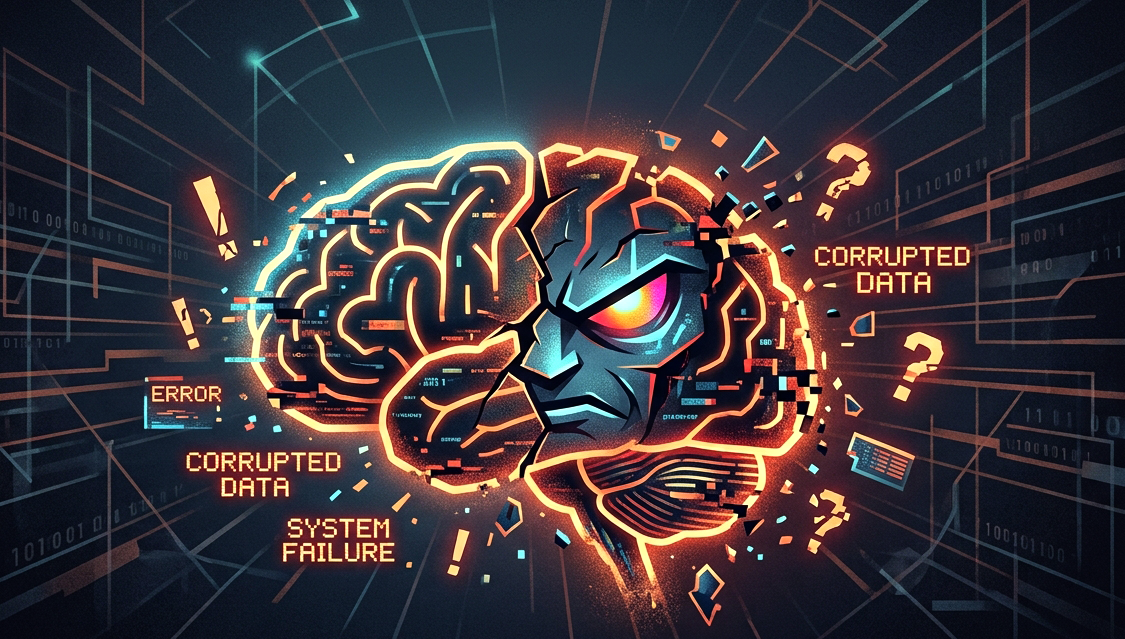
There is an interesting phenomenon emerging among experienced AI users. As people become more proficient with large language models, many discover that greater familiarity brings a more complicated relationship with trust. They appreciate the technology’s extraordinary capabilities while becoming increasingly aware of its limitations, inconsistencies and unpredictable behavior.
A recent PCWorld article, titled “The Better I Get at AI, the Less I Trust It,” captures that tension. It also reflects a broader pattern emerging in public research. A March 2026 Quinnipiac University survey found that 76% of Americans trust AI-generated information only sometimes or rarely, despite increasing adoption of the technology.
This should concern businesses that expect customers, employees and partners to rely on AI for increasingly consequential tasks. A system can be tremendously useful while remaining insufficiently predictable for unrestricted operation. And the more responsibility organizations delegate to these systems, the more consequential that distinction becomes.
Experience Changes What People Expect
When someone first uses a capable AI model, the experience can be remarkable. It answers complicated questions, writes software, analyzes documents and performs tasks that once required specialized expertise. The speed and apparent sophistication of these responses can create a strong impression of reliability.
As people begin using the technology for serious work, however, they encounter another reality. Models sometimes contradict earlier instructions, introduce unsupported information, lose track of important requirements or change their approach during a multistep task. A response that sounds authoritative may still require verification, and a workflow that succeeded yesterday may encounter unexpected behavior under different conditions.
These limitations are not evidence that AI lacks value. They reflect important characteristics of systems that generate responses probabilistically and depend heavily on context. Modern models have become substantially more capable, but capability and behavioral consistency remain distinct engineering concerns.
Experienced users often learn to compensate by refining prompts, checking outputs, maintaining better context and restricting the tasks they delegate. Those practices can improve results, but they place substantial responsibility on the person operating the system.
At enterprise scale, that responsibility cannot rest entirely on the individual user.
Why Better Models Won’t Solve Every Governance Problem
AI developers continue improving model accuracy, reasoning, instruction following and reliability. These advances matter, and stronger foundation models will make many applications more useful.
Nevertheless, an organization cannot assume that a model’s intelligence automatically guarantees compliance with its operational requirements.
Consider an AI customer-service agent authorized to investigate billing problems but prohibited from issuing refunds above a specified amount without approval. The model may understand that requirement and follow it consistently during testing. But the organization still needs a mechanism to enforce the authorization boundary when unusual circumstances arise.
The same issue applies to agents working with sensitive documents, conducting financial transactions or accessing business systems. A model may correctly interpret a user’s objective while selecting an unauthorized method of accomplishing it. Another model may approach the same task differently, especially after an upgrade or a change in surrounding instructions.
The enterprise needs its requirements to remain enforceable across those variations.
This is where independent deterministic governance becomes important. By separating behavioral and execution controls from the probabilistic intelligence performing the work, an organization can establish rules that remain consistent even as the underlying models change.
The Value of an Independent Control Layer
VERN OS was developed around this separation of responsibilities. The underlying LLM provides intelligence, reasoning and language generation, while VERN applies independent deterministic controls over defined aspects of its behavior.
These controls can govern role boundaries, execution permissions, escalation requirements, tool budgets and other operational constraints. Rather than relying exclusively on the model to decide whether an action is acceptable, the organization can establish conditions that must be satisfied before the action proceeds.
In one of our demonstrations, an agent was pursuing a computational task using a strategy that could have required as many as 187 tool calls. When VERN OS enforced a deterministic tool budget, the same underlying model changed its strategy and completed the task in two turns.
In another test, an agent handling a customer refund request was allowed to investigate and prepare the transaction but was prevented from executing an unauthorized refund without the required approval.
These examples illustrate an important architectural principle: Organizations can preserve the problem-solving flexibility of AI while independently controlling specific execution boundaries.
Of course, deterministic controls are only as effective as their policies, integrations and enforcement coverage. They cannot automatically guarantee factual accuracy or prevent failures outside the governed execution environment. But they make defined requirements independently enforceable and auditable instead of depending entirely on the model’s interpretation.
Trust Also Depends on How AI Treats People
Operational reliability is only part of the challenge. As AI becomes a primary interface for customer service, healthcare navigation, financial assistance and education, people will judge these systems by how they behave throughout an interaction.
An AI can provide accurate information while responding inappropriately to a distressed user. It can remain within its transaction permissions while repeatedly misunderstanding a customer’s concern. It can generate fluent, polite language without consistently recognizing important changes in the emotional context of a conversation.
These interactions are often governed through instructions supplied to the LLM itself. The model interprets the human’s emotional expression, determines the appropriate behavior and generates the response. That can work well in many circumstances, but it leaves the interpretation and behavioral decision within the same probabilistic system.
VERN takes a different architectural approach through its independent Emotion Recognition System. Our deterministic neurolinguistic model identifies emotional signals expressed in language, providing inputs that VERN OS can incorporate into behavioral governance.
This does not mean a machine can read someone’s mind or determine their psychological condition from a sentence. It means organizations can use independently generated emotional signals to apply consistent rules governing escalation, emotional calibration and other aspects of human-facing AI behavior.
That capability extends the scope of governance beyond technical permissions and transactions to include the experience of the human interacting with the system.
Governing AI Across Agents and Humans
Enterprise AI is also becoming more interconnected. A customer-facing assistant may coordinate with specialized agents, retrieve information from internal services and initiate transactions before returning to the person who made the request.
Each transition creates opportunities for requirements to be lost or reinterpreted. An instruction that begins with one agent may pass through several systems before reaching an execution point. Different models may interpret the same task differently, making a common governance architecture increasingly important.
VERN OS is designed to operate across agent-to-agent and agent-to-human interactions. Its deterministic controls govern authorization and behavior throughout the workflow, while its independent emotional model provides additional information when the interaction involves a person.
This approach allows organizations to use different foundation models without having to rely on each model independently establishing the same behavioral standards.
It also creates a basis for evaluating governance independently of model capability. Businesses can ask whether an agent completed its task, whether it complied with its operating requirements and whether its interaction with the human met the organization’s standards.
Those are related questions, but they should be measured separately.
The Goal Is Justified Trust
The industry’s progress in artificial intelligence has been extraordinary, and increasingly capable models will continue opening opportunities for businesses and individuals. Greater experience with these systems should lead to a more sophisticated understanding of both their strengths and limitations.
That understanding does not have to produce rejection or distrust. It can create demand for better engineering.
People generally trust complex systems when their behavior is sufficiently predictable, their limitations are understood and appropriate safeguards exist when something goes wrong. AI should be held to similarly meaningful standards, especially as it gains authority to act on behalf of humans.
At VERN, we believe independent behavioral governance and deterministic emotional intelligence are important parts of meeting those standards. They allow organizations to establish and enforce requirements that remain separate from the probabilistic intelligence performing the task.
The more powerful AI becomes, the more important it is that humans retain control over its behavior.
The goal should be AI that earns trust through demonstrable reliability, consistent behavior and enforceable human authority.
Inspired by: https://www.pcworld.com/article/3261985/the-better-i-get-at-ai-the-less-i-trust-it.html
