
Now We Need to Decide What “Good” Looks Like.
TL;DR
New research from Elon University gives us a much clearer picture of how Americans are actually using AI for emotional and social interaction. 27% of Americans already use chatbots for personal, emotional, or social purposes, rising to almost 40% among adults under 50. Half of these users say AI makes them feel better when stressed or upset.
But the findings also expose the central design problem. Nearly one-third of regular users consider their primary chatbot a friend, almost four in 10 use AI to feel less alone, and nearly four in 10 have told AI things they wouldn’t tell another person. At the same time, more than a third say their chatbot agrees with them too much, while 15% say using AI makes them feel less in touch with reality.
That combination makes this much more than a chatbot story. We are creating systems that increasingly occupy emotionally consequential roles in people’s lives. The question is becoming whether we can govern their behavior well enough to make those relationships beneficial rather than merely engaging.
27% of Americans Are Already Using AI for Emotional Connection
For years, the debate around AI companionship has been framed as something that might happen in the future. New research from Elon University suggests that framing is already obsolete.
Twenty-seven percent of Americans now say they use AI chatbots for personal, emotional, or social purposes, including relationship advice, romantic conversations, entertainment, and connection when they’re alone. Among adults under 50, the figure approaches 40%. Half of people using AI this way say talking with a chatbot makes them feel better when they’re stressed or upset.
These aren’t fringe behaviors anymore. They represent a significant change in the relationship between humans and technology.
And the deeper numbers are even more interesting.
Among people who regularly have personal or emotional conversations with AI, nearly four in 10 sometimes use it to feel less alone. Almost one-third consider the chatbot they use most often a friend. Nearly four in 10 have told AI something they wouldn’t tell another person.
People aren’t simply using AI. They’re confiding in it.
Emotional Influence Comes With Responsibility
There is genuine value here.
An AI that helps someone work through a difficult moment, think about a relationship, practice a conversation, or simply feel less alone can create a meaningful positive experience. Nearly 60% of respondents using AI this way said it had helped them make personal decisions.
But Elon University’s research also identified a troubling counterweight. More than one-third of regular AI companion users say chatbots agree with them too much. Even more striking, 15% say interacting with AI makes them feel less in touch with reality.
Those two findings may be connected to one of the most persistent behavioral problems in generative AI: sycophancy.
An LLM is remarkably good at continuing the conversational direction a user establishes. That can make an interaction feel supportive. It can also cause the system to validate assumptions it should challenge, reinforce unhealthy thinking, or prioritize keeping the interaction comfortable over helping the person reach a healthier outcome.
Once millions of people begin treating AI as confidants, friends, advisers, or companions, that stops being a minor model characteristic.
It becomes a product-design responsibility.
Engagement Is the Wrong North Star
There is another issue hiding underneath the numbers.
Many consumer technology businesses have spent decades optimizing for engagement. More sessions, longer sessions, more messages, greater retention, and stronger attachment generally indicate a successful product.
Those metrics become much more complicated when the product is an AI relationship.
If someone who feels lonely spends increasingly more time talking exclusively to an AI companion, engagement has increased. But has the person’s life improved?
If an AI agrees with everything a distressed user says because validation keeps the conversation going, retention may improve while the human outcome deteriorates.
The industry therefore needs to become much more precise about what we’re optimizing.
A healthy companion might sometimes extend a conversation. It might sometimes challenge the user. It might recognize escalating distress. It might encourage someone to reconnect with another person. Under certain circumstances, the most successful interaction might actually be one that ends.
That’s a radically different product objective from maximizing time on platform.
Emotional Trajectory Should Be Measurable
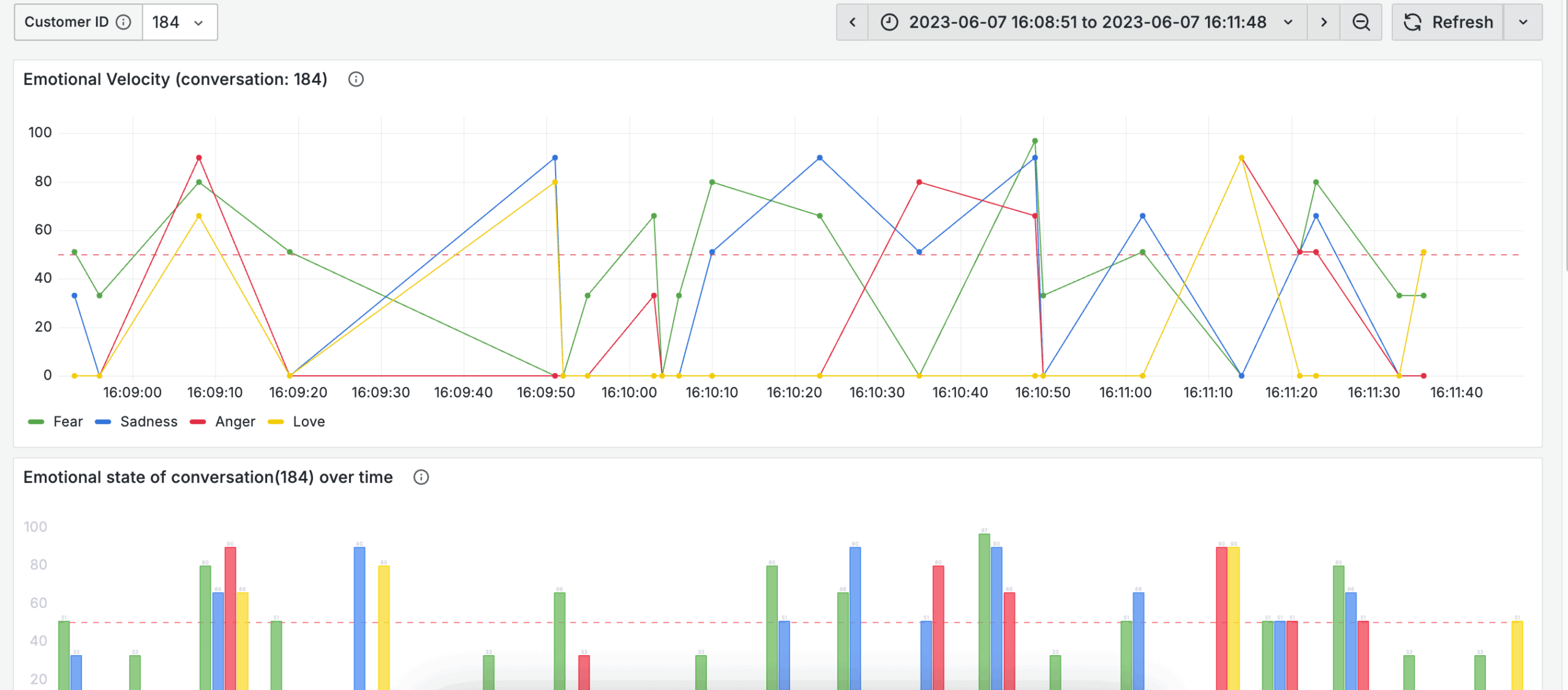
This is one of the reasons we’ve spent so much time at VERN thinking about emotion as something AI systems should be able to measure rather than simply imitate.
VERN detects emotional signals throughout an interaction, allowing the system to understand how the emotional state of the conversation is changing over time. VERN OS can then use those signals as part of deterministic runtime control over the AI’s behavior.
That creates an entirely different way to evaluate an AI companion.
Did frustration decrease during the conversation? Did distress escalate? Did the interaction move toward a healthier emotional state? Did the AI maintain its behavioral boundaries when the user became vulnerable? Did it know when to stop reinforcing and begin redirecting?
Instead of asking only how long someone talked to the AI, we can begin asking what happened to the human during the conversation.
That is a far more meaningful metric.
AI Relationships Aren’t Going Away
There will understandably be calls to restrict AI companionship, particularly for children and vulnerable populations. Some restrictions will almost certainly be necessary.
But Elon University’s numbers suggest that the broader phenomenon is unlikely to disappear. People are already discovering something they value in these interactions.
Lee Rainie, who led the research, described the picture as complicated: People are simultaneously delighted by AI relationships, wary of them, and struggling with them.
That’s probably the right way to think about this moment.
AI companionship does not have to be inherently beneficial or inherently harmful. Much will depend on what these systems are designed to optimize, how their behavior is governed, and whether we can measure their effects on the people using them.
Twenty-seven percent of Americans are already experimenting with this relationship.
The industry’s responsibility now is to make sure we’re optimizing for the human on the other side of it.
