3
Patents Granted
30-DAYS
To Launch
3000%
Engagement Lift
3
Filed Patents
30-DAY
Pilots
3000%
Engagement Lift

vern governs outcomes.
vern governs outcomes.
AI failure starts where governance ends.
The bottleneck is no longer intelligence. It is control.
The bottleneck is no longer intelligence. It is control.
AI generates answers.
AI generates answers.

The Problem

The Problem
The Problem
LLMs were built to generate responses.
Not to manage what happens when a real human is on the other end.
LLMs were built to generate responses.
Not to manage a real human on the other end.
↓
Inconsistent Behavior
The same prompt produces wildly different tones depending on the model, the session, or the day. There's no policy engine — just probabilistic output.

↓
Emotionally Blind Interactions

↓
Zero Run-Time control

↓
No Audit Trail

↓
Inconsistent Behavior
The same prompt produces wildly different tones depending on the model, the session, or the day. There's no policy engine — just probabilistic output.
↓
Emotionally Blind Interactions
Standard models can't detect when a patient is anxious, a customer is furious, or a user is about to drop off. They keep answering — regardless of what's actually happening.
Includes
↓
Zero Run-Time control
AI can respond, but it cannot ensure conversion, completion, de-escalation, or compliance. It generates. It does not govern in real-time.
Includes
↓
No Audit Trail
When something goes wrong in a regulated environment — healthcare, financial services, customer operations — there's nothing to show what the AI did, why, and what triggered it.
Includes
↓
Inconsistent Behavior
The same prompt produces wildly different tones depending on the model, the session, or the day. There's no policy engine — just probabilistic output.
↓
Emotionally Blind Interactions
Standard models can't detect when a patient is anxious, a customer is furious, or a user is about to drop off. They keep answering — regardless of what's actually happening.
Includes
↓
Zero Run-Time control
AI can respond, but it cannot ensure conversion, completion, de-escalation, or compliance. It generates. It does not govern in real-time.
Includes
↓
No Audit Trail
When something goes wrong in a regulated environment — healthcare, financial services, customer operations — there's nothing to show what the AI did, why, and what triggered it.
Includes
How it works
Your
AI stack is missing its control layer.
LAYER 01
APPLICATION LAYER
Agents • Channels
LAYER 03
LLM LAYER
Reasoning • Generation
LAYER 02
VERN OS LAYER
Emotion • Behavioral Modules • Governance
Your
AI stack is missing its control layer.
LAYER 01
APPLICATION LAYER
Agents • Channels
LAYER 03
LLM LAYER
Reasoning • Generation
LAYER 02
VERN OS LAYER
Emotion • Behavioral Modules • Governance
What's inside
VERN OS
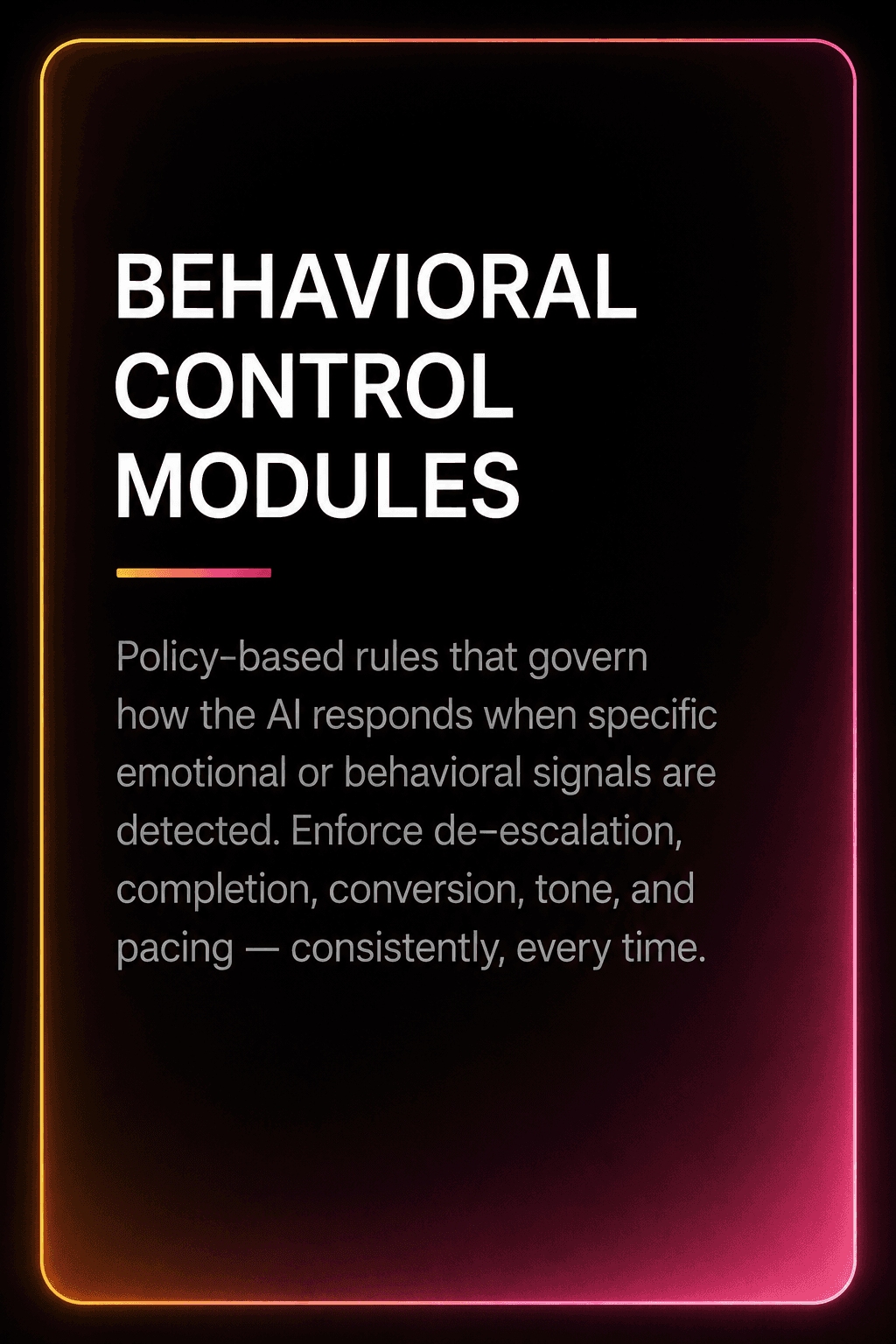

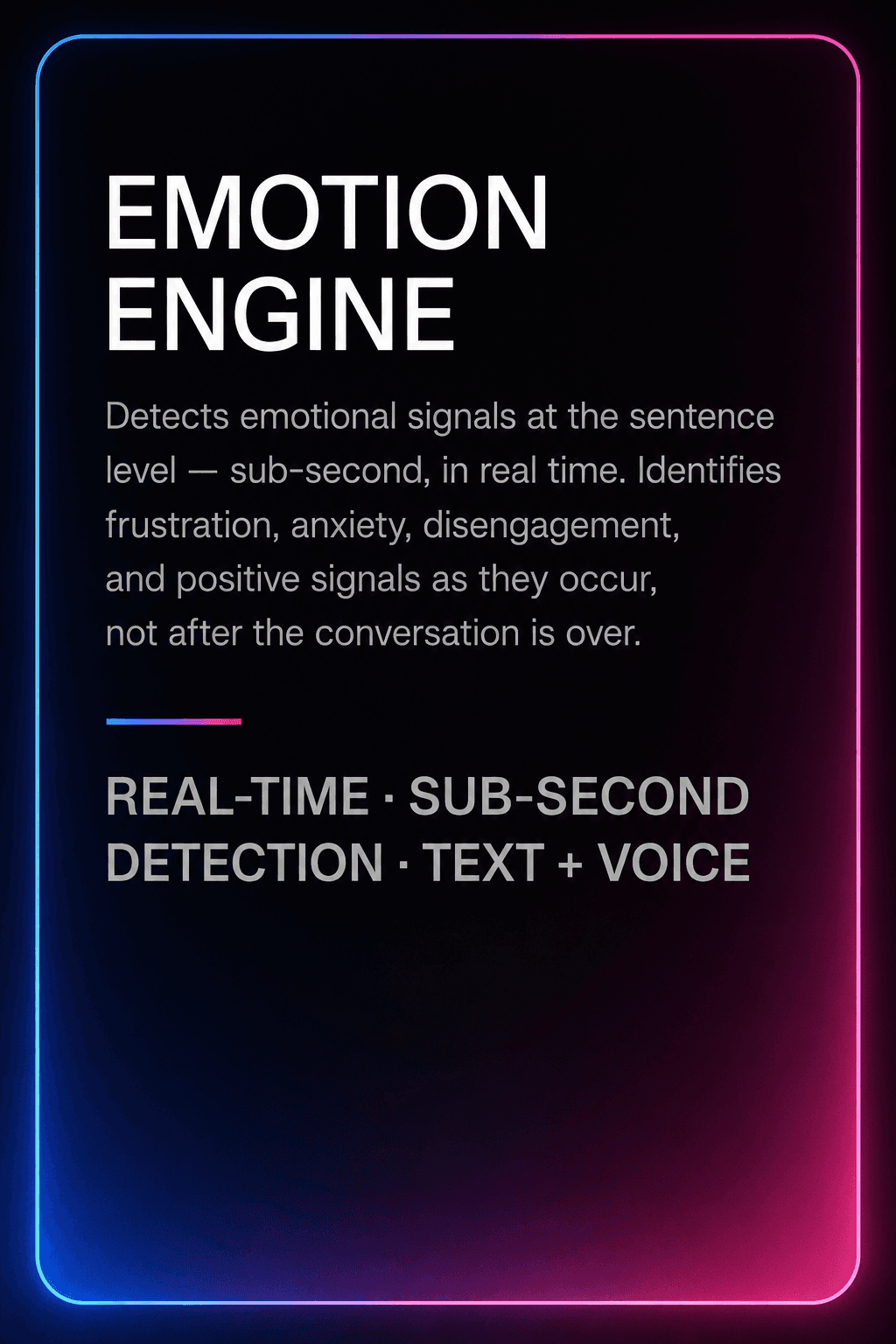
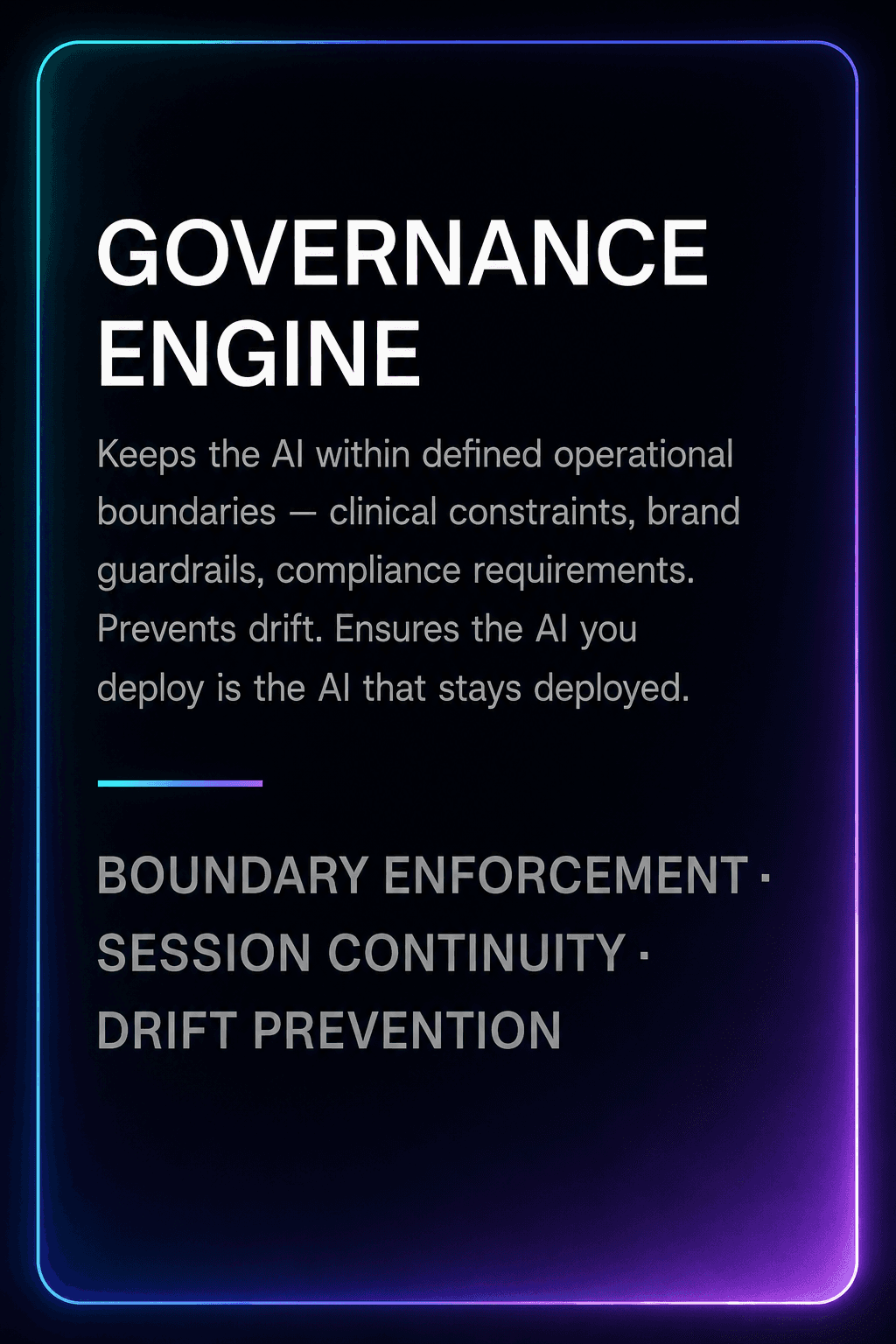

Behavioral Control
Where VERN Deploys
Built for AI interactions where trust, emotion, and outcomes matter.
MOIRA
AI guided assessment workflows &
conversational intake

MOIRA
AI guided assessment workflows &
conversational intake
Whether you're supporting patients, advising clients, or handling sensitive conversations,
VERN OS helps you deploy AI agents safely while meeting compliance and governance requirements.

AI Avatars & Agents
Personality and behavior governance for human-like AI interfaces.

AI Avatars & Agents
Personality and behavior governance for human-like AI interfaces.
AI Avatars & Agents
Personality and behavior governance for human-like AI interfaces.

Financial Services
Governed conversations for regulated, high-trust customer journeys.
VERN governs that moment before it becomes a business problem

Financial Services
Governed conversations for regulated, high-trust customer journeys.
VERN governs that moment before it becomes a business problem
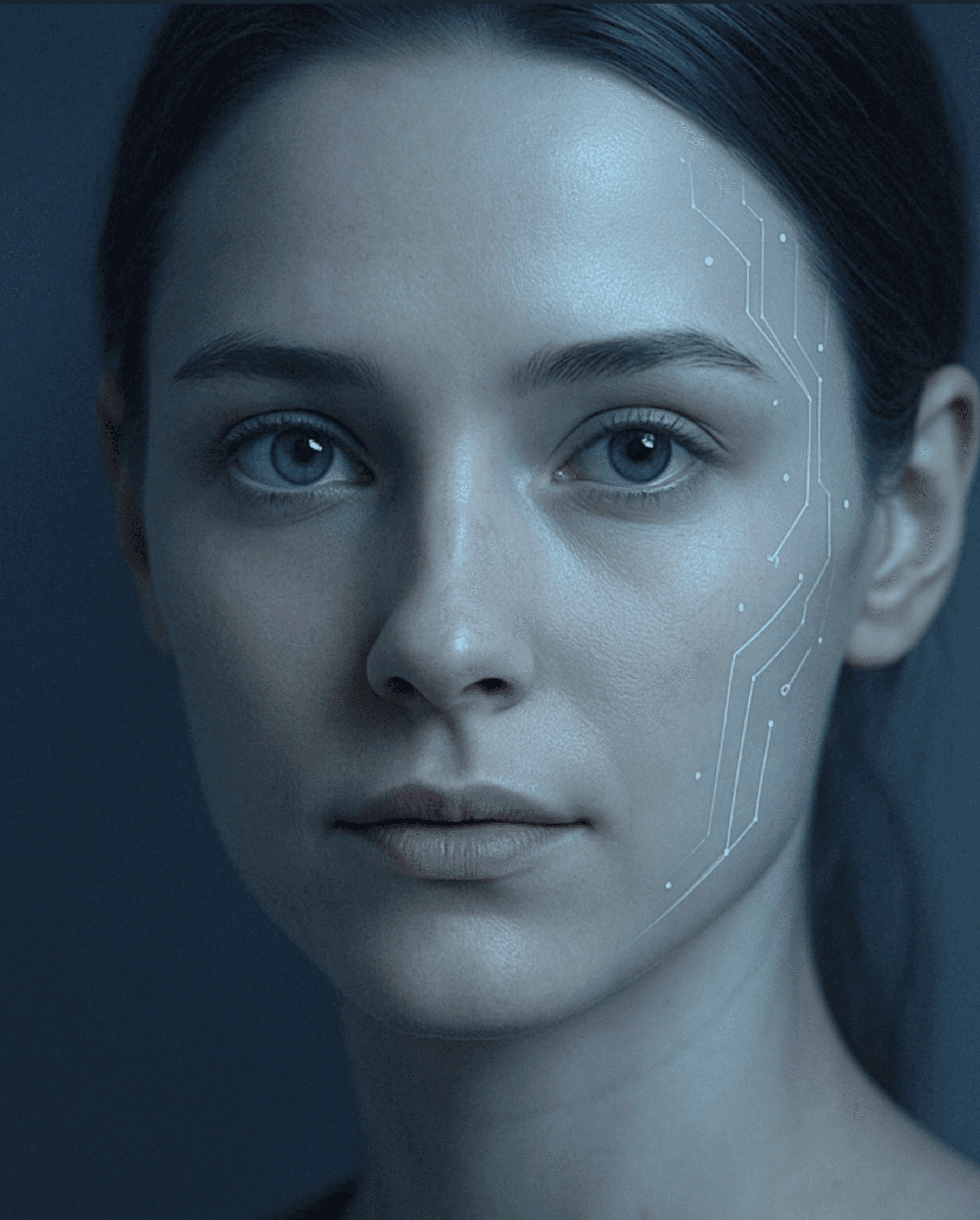
TEST OUR DEPLOYMENTS






Testimonials
Testimonials
Testimonials


VERN OS governs "Gloria," an AI Human guiding users through structured ADHD assessments.

Mentavi Health ADHD Assessment Intake · Utah Pilot


© 2026 VERN AI
VERN OS governs "Gloria," an AI Human guiding users through structured ADHD assessments.
Mentavi Health ADHD Assessment Intake · Utah Pilot
© 2026 VERN AI
- Voices of Trust








Case studies
Case studies
Case studies
Not demos.
Deployments.
Not demos.
Deployments.


How we grew
How we grew
How we grew
"We didn't build
another AI app.
We built the OS
behind AI-Human interaction."
"We didn't build
another AI app.
We built the OS
behind AI-Human interaction."
Craig Tucker | CEO & Founder
2019
Foundation
Spun out of software development company THiNC, The Virtual Emotion Resource Network (VERN) began.
2021-2022
In 2021 we launched our first VERN product, and began pilots with MSUFCU and Boise State University. In 2022 we partnered with Evrmore.io, an award-winning mental health applicaiton that serves tens of thousands of people worldwide.
2022
Expanding horizons
Expanded globally, supporting key industries like healthcare and finance.
2025
Leading with innovation
Introduced AI-driven solutions that improved team efficiency.
2018
Foundation
Started offering strategic guidance to early-stage clients.
Previous
Next
2019
Foundation
Spun out of software development company THiNC, The Virtual Emotion Resource Network (VERN) began.
2021-2022
In 2021 we launched our first VERN product, and began pilots with MSUFCU and Boise State University. In 2022 we partnered with Evrmore.io, an award-winning mental health applicaiton that serves tens of thousands of people worldwide.
2022
Expanding horizons
Expanded globally, supporting key industries like healthcare and finance.
2025
Leading with innovation
Introduced AI-driven solutions that improved team efficiency.
2018
Foundation
Started offering strategic guidance to early-stage clients.
Previous
Next

Craig Tucker
CEO & Founder
Craig Tucker
CEO & Founder

Meet the Team
Meet the Team
Meet the Team
Craig Tucker
Founder & CEO


Craig Tucker
Founder & CEO
Craig Tucker
Founder & CEO
Edward Christensen
President

Edward Christensen
President
Edward Christensen
President
Dennis Walters
CTO

Dennis Walters
CTO
Dennis Walters
CTO
Praneet Gill
CSO

Praneet Gill
CSO
Praneet Gill
CSO
Sidney Marsh
Head of Growth

Sidney Marsh
Head of Growth
Sidney Marsh
Head of Growth
Amy Tucker
Senior AI Designer

Amy Tucker
Senior AI Designer
Amy Tucker
Senior AI Designer
Samkit Shah
Senior Developer

Samkit Shah
Senior Developer
Samkit Shah
Senior Developer
Robert Chen
Head of Engineering
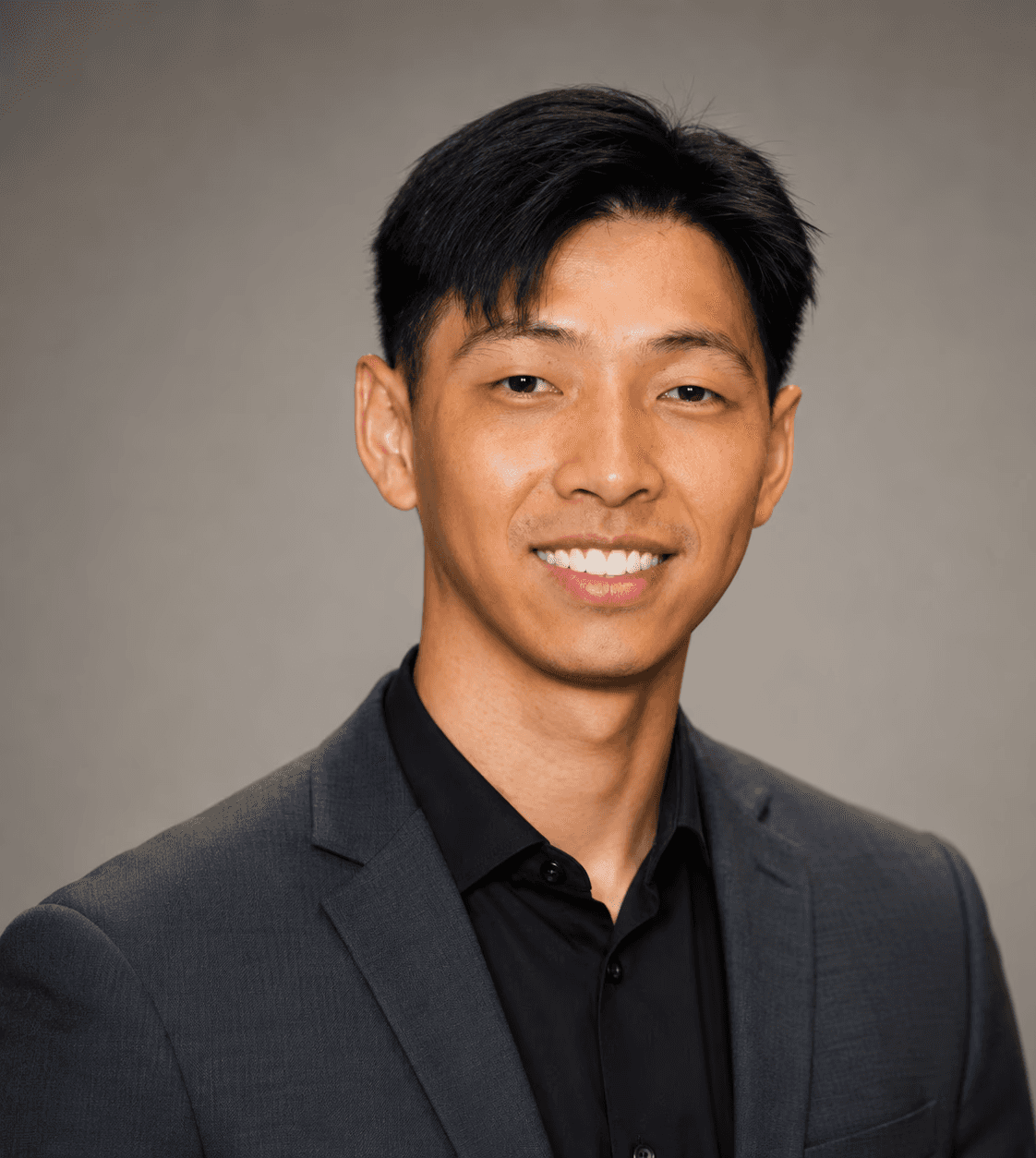
Steve Pappas
Sr. Advisor

We’re here to help
Ready to see
what controlled
AI looks like?
In 30 minutes, we'll show you a live VERN OS deployment.
No slides. No concepts. A working system, running live.


We’re here to help
Ready to see
what controlled
AI looks like?
In 30 minutes, we'll show you a live VERN OS deployment.
No slides. No concepts. A working system, running live.
We’re here to help
Ready to see
what controlled
AI looks like?
In 30 minutes, we'll show you a live VERN OS deployment.
No slides. No concepts. A working system, running live.